
Summary
A modern basement can still include the features people often associate with man cave renovation ideas: a media wall, comfortable seating, games, storage, and a beverage zone. The difference is that today’s best lower levels are more flexible, more comfortable, and designed for the whole household.
Whether it becomes a basement lounge, media room, game room, or lower-level retreat, the goal is the same: to create a space that feels personal, useful, and easy to enjoy.
Table of Contents
- Rethink the Man Cave
- Plan the Purpose
- Add a Media Wall
- Choose Better Seating
- Create a Snack Zone
- Make Room for Games
- Build In Storage
- Add Personal Style
- Layer the Lighting
- Plan for Sound
- FAQ: Man Cave Renovation Ideas
Rethink the Man Cave
The phrase “man cave” may be familiar, but today’s best basement remodels are designed for much more than one person or one purpose. A well-planned lower level can become a media room, game space, hobby area, guest lounge, snack zone, or everyday retreat that works for the whole household.
That shift matters. Older basement remodels were often built around a narrow idea of what the space should be: a television, a bar, and a place to watch the game. Those features can still be part of the design, but homeowners are often looking for something more versatile now.
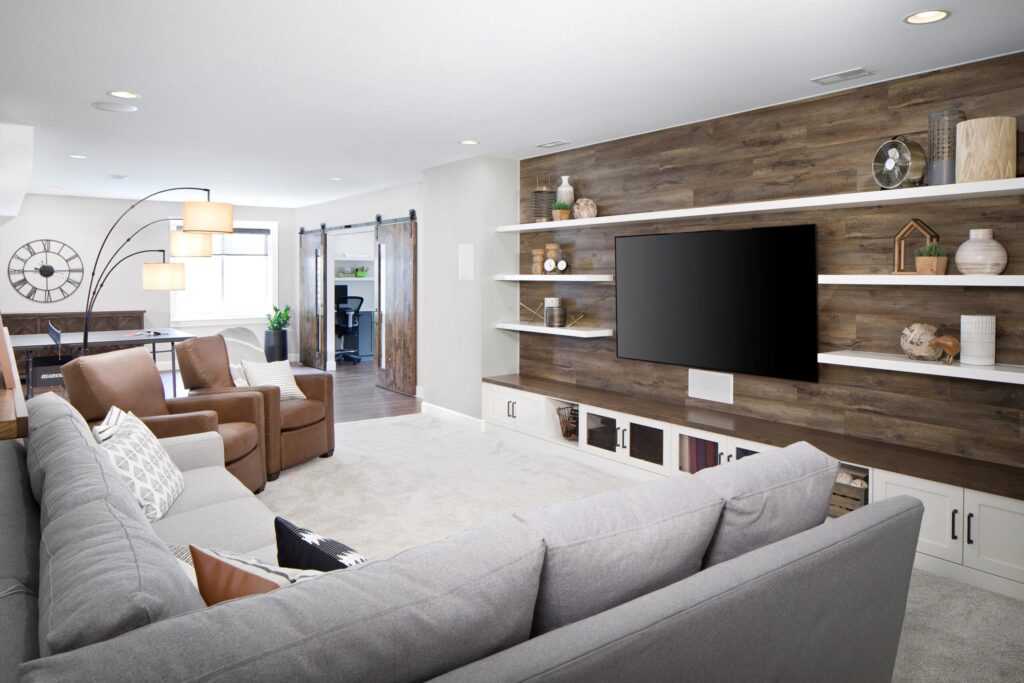
A modern basement can support movie nights, casual hosting, kids and teens, visiting family, hobbies, storage, fitness, music, and quiet downtime. The best man cave renovation ideas are really basement renovation ideas. They are about creating a lower level that feels comfortable, personal, and useful for the way people actually live.
Plan the Purpose
Before choosing finishes, furniture, or fixtures, start with the purpose of the space. What do you want your basement to support on a regular weeknight? What should it make easier when people come over? What does your main floor not currently have room for?
Some basements are designed around one primary use, such as a home theater or game room. Others work better as flexible spaces with several connected zones. A lower level might include a media area, a beverage station, a game table, a guest room, a workout area, a play space, or built-in storage.
This early planning step helps avoid a common remodeling mistake: filling the basement with features that look good individually but do not work well together. A thoughtful layout considers traffic flow, sightlines, lighting, ceiling height, sound, storage, and how people will move through the room.
The goal is not to create a basement that checks every possible box. The goal is to create one that fits your home.
Add a Media Wall
A media area is still one of the most popular features in a basement remodel, and for good reason. Basements are naturally suited for movie nights, game days, streaming, and gaming because they tend to be quieter and more separated from the main living areas.
The key is to design the media wall with intention. Screen placement, seating distance, glare, lighting, and speaker locations all affect how comfortable the room feels. If the media wall is the anchor of the basement, it should feel integrated into the design rather than added after the fact.
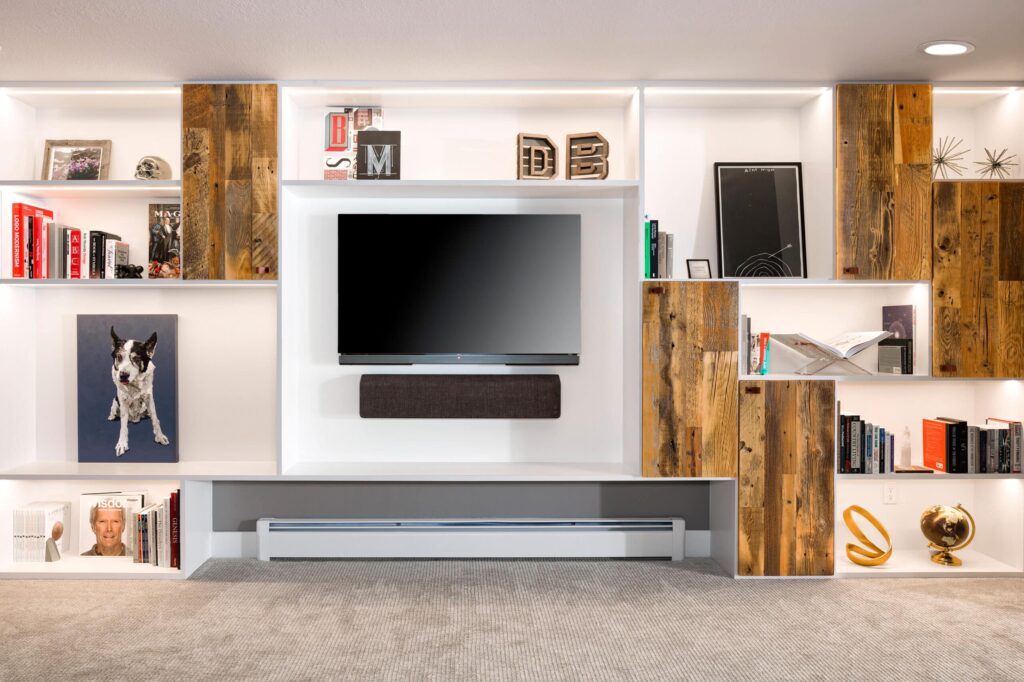
Built-ins can help organize speakers, remotes, gaming systems, streaming devices, books, games, and display items. Low cabinetry can provide storage without overwhelming the room. A clean media wall can make the basement feel finished while still keeping the space practical for everyday use.
For a more flexible basement lounge, avoid letting the television dominate every decision. The best media areas support watching and gathering without making the whole lower level feel like a single-purpose theater.
Choose Better Seating
Comfortable seating is one of the most important parts of any basement lounge or entertainment room. The right seating plan depends on how the room will be used.
A large sectional can be a great choice for family movie nights or relaxed gatherings. Lounge chairs, ottomans, benches, or movable poufs can add flexibility when more people are visiting. If the basement includes a game area or beverage station, smaller seating groups can help create a more natural flow.
Think beyond the number of seats. Consider where people will set drinks or snacks, how they will move through the room, and whether the seating supports conversation as well as screen viewing. A basement that works for one person watching a show should also work when a larger group spends the evening together.
Durable fabrics and easy-to-clean materials are worth considering, especially if the space will be used by kids, pets, or guests. Comfort matters, but so does longevity.
Create a Snack Zone
Many people searching for man cave renovation ideas are also thinking about a basement bar. A bar can be a great feature, but it is not the only option. Today’s basement remodels often include beverage stations, compact kitchenettes, coffee bars, snack storage, or undercounter refrigeration instead of a traditional bar setup.
The right choice depends on how you plan to use the space. If you host often, a wet bar with a sink, dishwasher drawer, ice maker, or beverage refrigerator might make sense. If your basement is more of an everyday family lounge, a simple snack zone with closed storage and a compact refrigerator may be enough.
Finishes can help the area feel connected to the rest of the basement. Cabinetry, tile, stone, wood, and lighting all contribute to the look and feel of the space. A beverage or snack zone can be practical without feeling overly themed.

Planning matters here. Plumbing, electrical needs, ventilation, appliance clearances, and storage should be considered early so the finished space works smoothly.
Make Room for Games

A finished basement is a natural place for recreation, but recreation looks different in every home. Some households want a pool table, shuffleboard, card table, or gaming area. Others need space for music, art, fitness, reading, crafts, puzzles, or kids’ play.
The best design leaves enough room for each activity to work comfortably. A pool table needs clearance around all sides. A game table needs lighting and nearby seating. A music area may need sound planning. A play area may need durable flooring and easy storage. A hobby space may need task lighting, counter space, and outlets.
If the basement has enough square footage, zones can make the space more useful. A media area, game area, and snack area can all feel connected while serving different purposes. Furniture placement, area rugs, ceiling details, lighting, and built-ins can help define those areas without adding unnecessary walls.
Flexibility is especially valuable. The way a household uses a basement can change over time, so it helps to design a room that can evolve.
Build In Storage

Storage is not always the most exciting part of a basement remodel, but it is often what makes the finished space successful. Basements tend to collect everything: games, blankets, media equipment, sports gear, toys, seasonal décor, extra serving pieces, fitness equipment, and household overflow.
A good storage plan gives those items a place to go. Built-ins, closets, base cabinets, drawers, floating shelves, benches with storage, and concealed utility areas can all help the basement stay organized.
Storage also supports flexibility. When the room is easy to reset, it can shift from movie night to game night to hosting without feeling chaotic. Closed storage is especially helpful for items that do not need to be on display.
If your basement also includes mechanical systems, sump access, utility panels, or storage rooms, those needs should be included in the remodel plan. Access can be designed in a way that is practical and visually quiet.
Add Personal Style
One reason people are drawn to the idea of a man cave is the chance to create a space that feels personal. That part is worth keeping. A basement lounge should reflect the people who live there.
Personal details might include framed photographs, artwork, books, records, sports memorabilia, travel pieces, vintage signs, musical instruments, collections, or objects tied to local places and memories. These elements can bring warmth and character to the room.
The difference between personal and cluttered often comes down to editing and placement. Built-in shelving, display cabinets, gallery walls, and picture lighting can help meaningful items feel intentional. A designer can help balance personal pieces with the architecture of the space so the room feels layered rather than crowded.
The goal is not to create a theme that becomes outdated quickly. It is to create a lower level that feels connected to your home and your life.
Layer the Lighting
Lighting is one of the biggest factors in how a basement feels. Because lower levels often have limited natural light, they need more than a single overhead fixture.
A layered lighting plan usually works best. Recessed lighting can provide general illumination. Sconces can add warmth and depth. Pendants can define a bar, game table, or seating area. Undercabinet lighting can make a beverage station more functional. Dimmers can help the room shift from bright and active to soft and relaxed.
Different zones may need different light levels. A media area benefits from dimmable ambient lighting. A game or hobby area needs stronger task lighting. A hallway, stairwell, or guest area needs safe, comfortable illumination.
Warm, well-placed lighting can make a basement feel less like a basement and more like a natural extension of the home.
Plan for Sound
Sound can have a major impact on how comfortable a basement feels. Media rooms, game areas, music spaces, and gathering rooms can all create noise that travels to the main floor or nearby bedrooms if sound is not considered during the remodel.
Depending on the layout and use of the space, sound planning might include insulation, acoustic panels, solid-core doors, carpeting or rugs, upholstered furniture, or careful speaker placement. If the basement will be used for music, gaming, movies, or late-night gatherings, these details are worth discussing early.
Comfort also includes temperature, airflow, ceiling height, flooring, and moisture control. Basements have different conditions than main-floor rooms, so the materials and systems should be chosen accordingly. Durable flooring, proper ventilation, thoughtful heating and cooling, and moisture-aware construction can all help the space feel better and perform better over time.
A successful basement remodel is not just about how the room looks. It is about how it feels to spend time there.
Bringing It All Together
The most useful man cave renovation ideas are not limited to one style or one type of homeowner. They are about creating a basement that feels comfortable, personal, and flexible enough for everyday life.
A modern lower level might include a media wall, sectional, wet bar, game table, display shelving, built-in storage, and layered lighting. It might also include a guest space, play area, workout zone, reading corner, or hobby room. The best design depends on how your household wants to live.
With thoughtful planning, a basement can become more than extra square footage. It can become a welcoming extension of the home.
FAQ: Man Cave Renovation Ideas
What should I include in a man cave renovation?
Common features include a media area, comfortable seating, a game table or hobby zone, a wet bar or beverage station, built-in storage, layered lighting, and personal display space. The best choices depend on how you plan to use the basement.
How do you make a man cave feel more modern?
Focus on flexible design, durable materials, clean storage, layered lighting, and a layout that supports more than one activity. Instead of creating a heavily themed room, design a basement lounge that feels comfortable, personal, and connected to the rest of the home.
Is a basement bar still a good idea?
A basement bar can be a great idea if you host often or want a dedicated place for drinks and snacks. Many homeowners also choose a beverage station, coffee bar, compact kitchenette, or snack zone for a more flexible everyday setup.
What is the difference between a man cave and a basement lounge?
A man cave is often thought of as a personal retreat, while a basement lounge is usually more flexible and inclusive. A modern basement lounge can still include media, games, a bar, and personal details, but it is designed to work for the whole household.
How much space do I need for a basement entertainment room?
The amount of space depends on the features you want to include. A media area needs comfortable viewing distance and seating. A pool table or game table needs clearance around all sides. A beverage station needs space for cabinetry, appliances, and circulation. A design-build team can help determine what will fit comfortably.
How do I keep a basement from feeling dark?
Use layered lighting, warm finishes, open sightlines, reflective surfaces, and lighter materials where appropriate. If the basement has windows, the layout should make the most of that natural light.
What lighting works best for a basement remodel?
A mix of recessed lighting, sconces, pendants, undercabinet lighting, task lighting, and dimmers usually works best. Each zone should have lighting that supports its purpose, from watching movies to playing games to preparing snacks.
Can a basement serve multiple purposes?
Yes. Many basements work best when they include multiple zones, such as a media area, game space, snack zone, storage area, guest room, or hobby space. Furniture placement, lighting, rugs, and built-ins can help define each area without closing off the room.
Should I hire a design-build team for a basement renovation?
A design-build team can help coordinate design, budgeting, construction planning, materials, permitting, and schedule from the beginning. This is especially helpful if your basement remodel includes plumbing, electrical work, built-ins, lighting changes, or several connected zones.